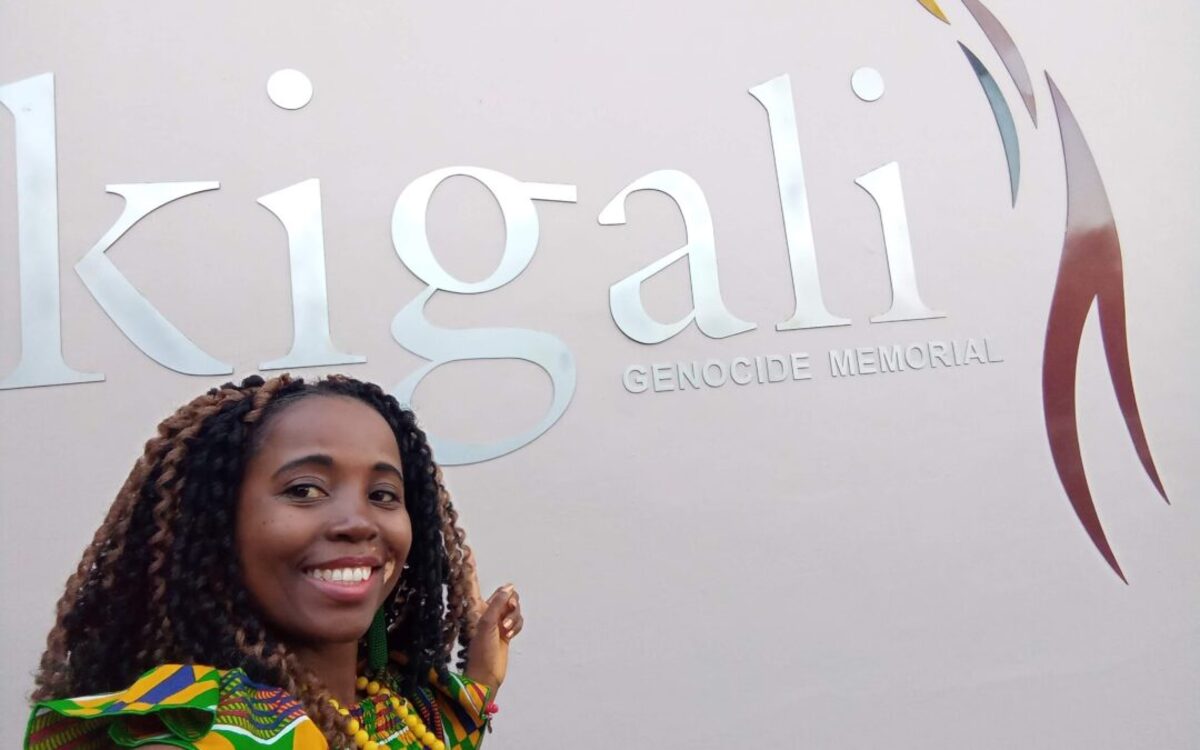

A visit to the Kigali Genocide Memorial is unlike visiting any other attraction in Rwanda.
It isn’t simply a museum or a historical landmark. It is a place of remembrance, reflection, and education that tells one of the most difficult chapters in Rwanda’s history while also highlighting the country’s remarkable journey toward reconciliation and national unity.
Before arriving, I wasn’t sure what to expect. I knew about the 1994 Genocide against the Tutsi through books and documentaries, but I wondered how Rwanda had chosen to preserve such a painful part of its past.
After spending time at the memorial, I left with a deeper appreciation for both the lives remembered there and the resilience of the Rwandan people.
If you’re planning a trip to Kigali, here’s what you should know before visiting.
What Is the Kigali Genocide Memorial?
Located in Rwanda’s capital city, the Kigali Genocide Memorial commemorates the victims of the 1994 Genocide against the Tutsi, during which more than 800,000 people were killed over approximately 100 days between April and July 1994.
The memorial serves three important purposes:
- Honoring those who lost their lives.
- Educating future generations about the genocide.
- Promoting peace and reconciliation to help prevent similar tragedies.
Today, it is one of Rwanda’s most visited historical sites and an important place for both Rwandans and international visitors.
Is the Kigali Genocide Memorial Worth Visiting?
Absolutely.
Although it is an emotional experience, I believe it is one of the most meaningful places to visit in Rwanda.
The memorial helps visitors understand how far the country has come. Modern Rwanda is often recognized for its cleanliness, safety, and rapid development, but visiting the memorial provides important context behind that transformation.
Rather than focusing only on the tragedy, the memorial also highlights the importance of unity, forgiveness, and building a better future. This place is a must-see for mnay tourists. Check out on Tripadvisor what others had to say.
What to Expect During Your Visit
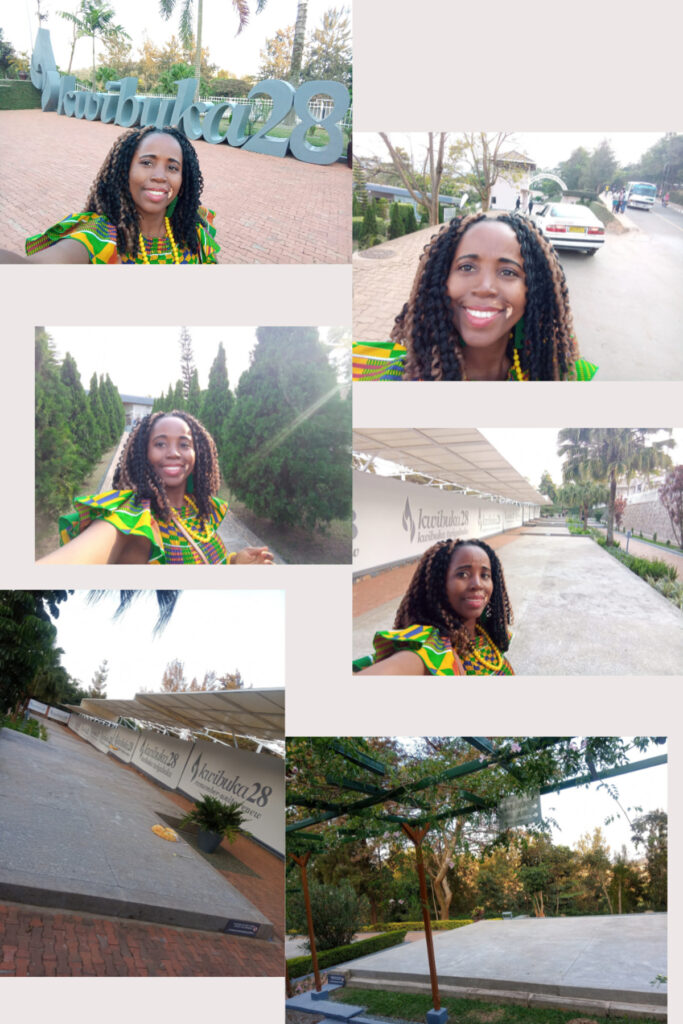
As I entered through the beautifully maintained grounds, I was immediately struck by the peaceful atmosphere.
Flowers, trees, and carefully landscaped gardens surround the memorial, creating a quiet space for reflection before entering the main exhibition.
Near the entrance, I passed a small arts and souvenir shop before making my way into the main building.
Inside, the exhibits are thoughtfully organized into different sections that explain Rwanda’s history before, during, and after the genocide.
Large display panels, photographs, personal testimonies, videos, and historical timelines guide visitors through the events.
Some of the images and stories are difficult to see, but they help explain the devastating human impact of the genocide in a respectful and educational way.
The information is presented in both English and Kinyarwanda, making it accessible to many visitors. Their website also has explicit details.
The Peace School: Teaching Future Generations
One feature I didn’t expect to find was the Peace School.
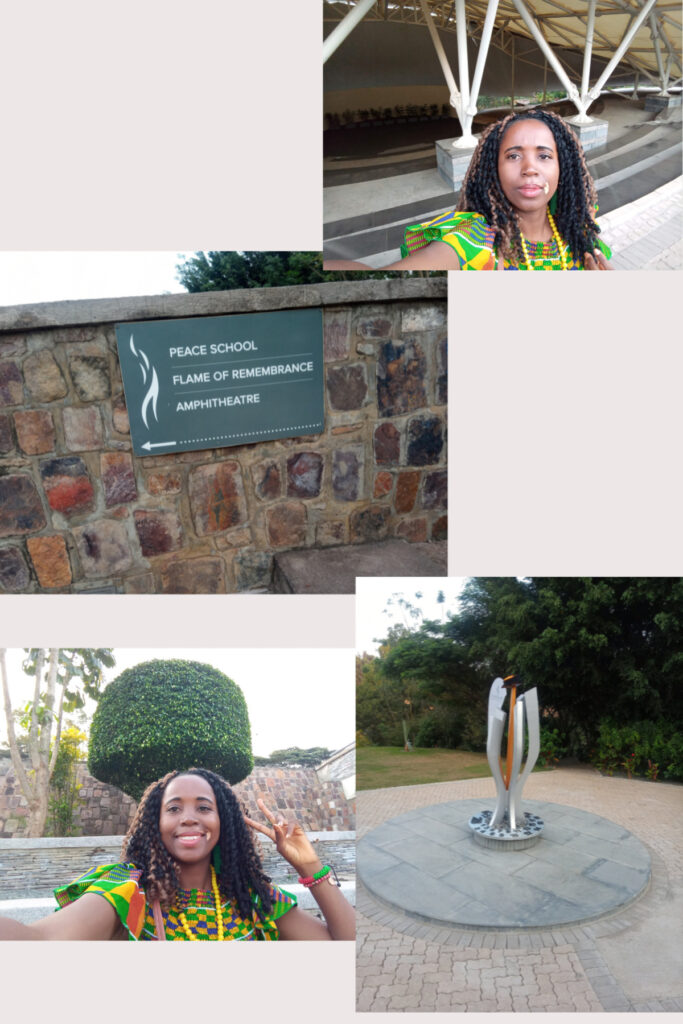
Located within the memorial grounds is a large open-air amphitheater that can accommodate hundreds of people.
This space is used for peace education programs, lectures, and discussions that encourage younger generations to learn about Rwanda’s history while promoting reconciliation and peaceful coexistence.
For me, this was one of the most inspiring parts of the visit.
Rather than allowing history to divide future generations, Rwanda has chosen to use education as a tool for national healing.
The Flame of Remembrance
Nearby stands one of the memorial’s most recognizable symbols—the Flame of Remembrance .
At first, I noticed what appeared to be a metal sculpture supporting a burning flame.
Only later did I learn its significance.
The eternal flame symbolizes remembrance and Rwanda’s commitment to ensuring that the events of 1994 are never forgotten.
It also represents hope for future generations and the country’s determination to prevent such a tragedy from happening again.
The Memorial Gardens and Mass Graves
Outside the main exhibition building are beautifully maintained gardens that provide visitors with a peaceful place to reflect.
Within these grounds are mass graves where more than 250,000 victims are buried.
Walking through this area was one of the most emotional moments of my visit.
Despite the sadness associated with the site, the gardens are filled with flowers and carefully maintained pathways that create an atmosphere of dignity and respect.
Many Rwandan families continue to visit these graves to honor loved ones whose remains were recovered and reburied here.
I made a playlist of several other historical sites and art galleries that you can visit in Rwanda.
Visiting the Nyanza Genocide Memorial
During my trip, I also visited the Nyanza Genocide Memorial , another important remembrance site located outside central Kigali.
Unlike the Kigali Memorial, Nyanza has a quiet atmosphere and focuses more on symbolic landscaping.
One feature that immediately caught my attention was the Garden of Memory , officially inaugurated in 2019.
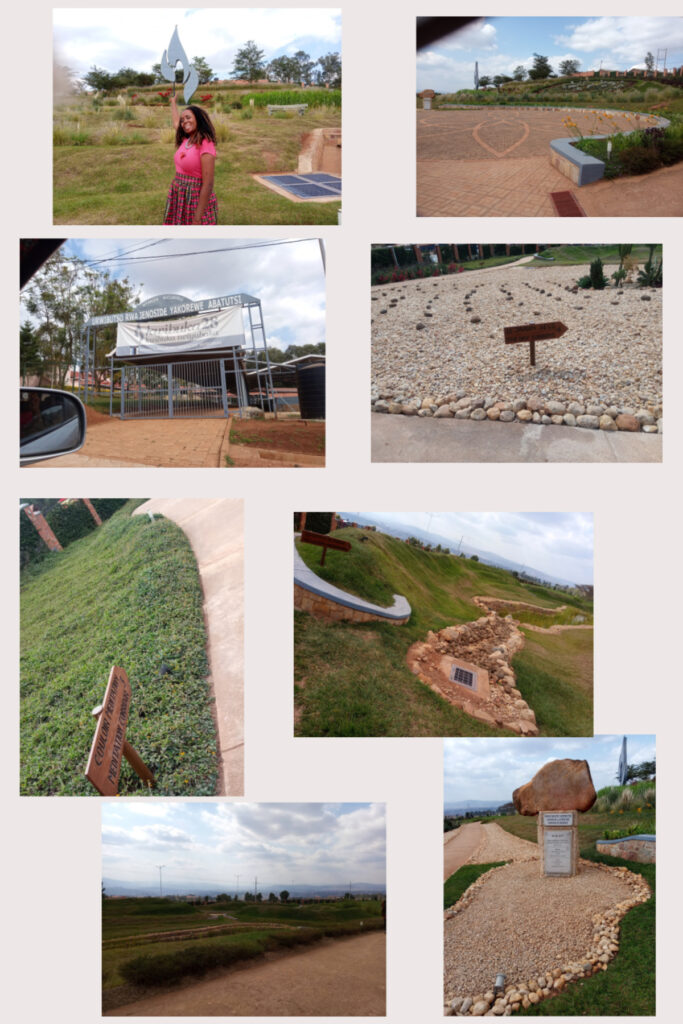
Throughout the garden, different design elements represent themes such as remembrance, loss, meditation, and hope.
The Meditation Corridor , bordered by neatly trimmed grass, invites visitors to pause and reflect.
Elsewhere, carefully arranged stone gardens symbolize both the suffering of the past and the country’s journey toward healing.
Although simpler than Kigali’s main memorial, I found Nyanza equally moving in its own way.
Rwanda’s Remarkable Transformation
What impressed me most wasn’t only the memorial itself.
It was stepping back into modern Kigali afterwards.
The contrast was striking.
The city is clean, organised, and full of energy.
People go about their daily lives, businesses continue to grow, and construction projects are visible throughout the capital.
Knowing the country’s history made this transformation even more remarkable.
One thing I noticed throughout my visit to Rwanda was the strong emphasis on national unity.
Rather than focusing on ethnic divisions, many Rwandans today simply identify themselves as Rwandans.
While the past can never be erased, the country has chosen to focus on reconciliation, education, and building a peaceful future together.
Visiting the memorial helped me understand that Rwanda is not trying to forget its history.
Instead, it has chosen to remember it while ensuring future generations learn from it.
Tips Before Visiting the Kigali Genocide Memorial
To make the most of your visit, keep these practical tips in mind:
- Allow at least 2 to 3 hours to explore the memorial properly.
- Dress respectfully, as this is a place of remembrance.
- Keep noise to a minimum and be considerate of other visitors.
- Some exhibits can be emotionally difficult, so take your time if needed.
- Consider visiting with a guide if you want additional historical context.
Frequently Asked Questions
The memorial is located in Kigali, Rwanda’s capital city, and is easily accessible by taxi or ride-hailing services.
Admission policies can change over time. It’s best to check the memorial’s official website before your visit for the latest information on entrance fees and opening hours.
Most visitors spend between 2 and 3 hours exploring both the exhibitions and memorial gardens.
Yes. Visitors from around the world are welcome, provided they behave respectfully.
Photography rules may vary in different sections of the memorial. Always follow the guidance provided by staff and posted signs.
Final Thoughts
Visiting the Kigali Genocide Memorial was one of the most meaningful experiences of my time in Rwanda.
While it is impossible to leave without feeling the weight of the country’s history, I also left inspired by Rwanda’s resilience.
The memorial is not simply about remembering the past.
It is about understanding how remembrance, education, and reconciliation can help shape a better future.
If you’re visiting Kigali, I believe this is one place that deserves a place on your itinerary—not only to learn about Rwanda’s history but also to appreciate the extraordinary progress the country has made since one of the darkest chapters in its past.
As you continue to reflect on Rwanda’s powerful journey of remembrance, I invite you to explore more of my experiences from across the continent.
Whether you are interested in deep dives into historical landmarks or looking for practical travel guides to help you navigate your next trip, there is plenty more to discover.
My goal is to share these stories to keep the lessons of the past alive while inspiring your own future adventures.
You can find my other articles on psalmsofsarah/travel , where I share further insights into Rwanda’s culture, best restaurants, historical sites, and personal travel tips.
If you found this post helpful, please feel free to leave a comment below or share it with others who might be interested in learning about these important stories.
I’d love to hear about your own experiences or any questions you might have about planning a visit to these meaningful places.