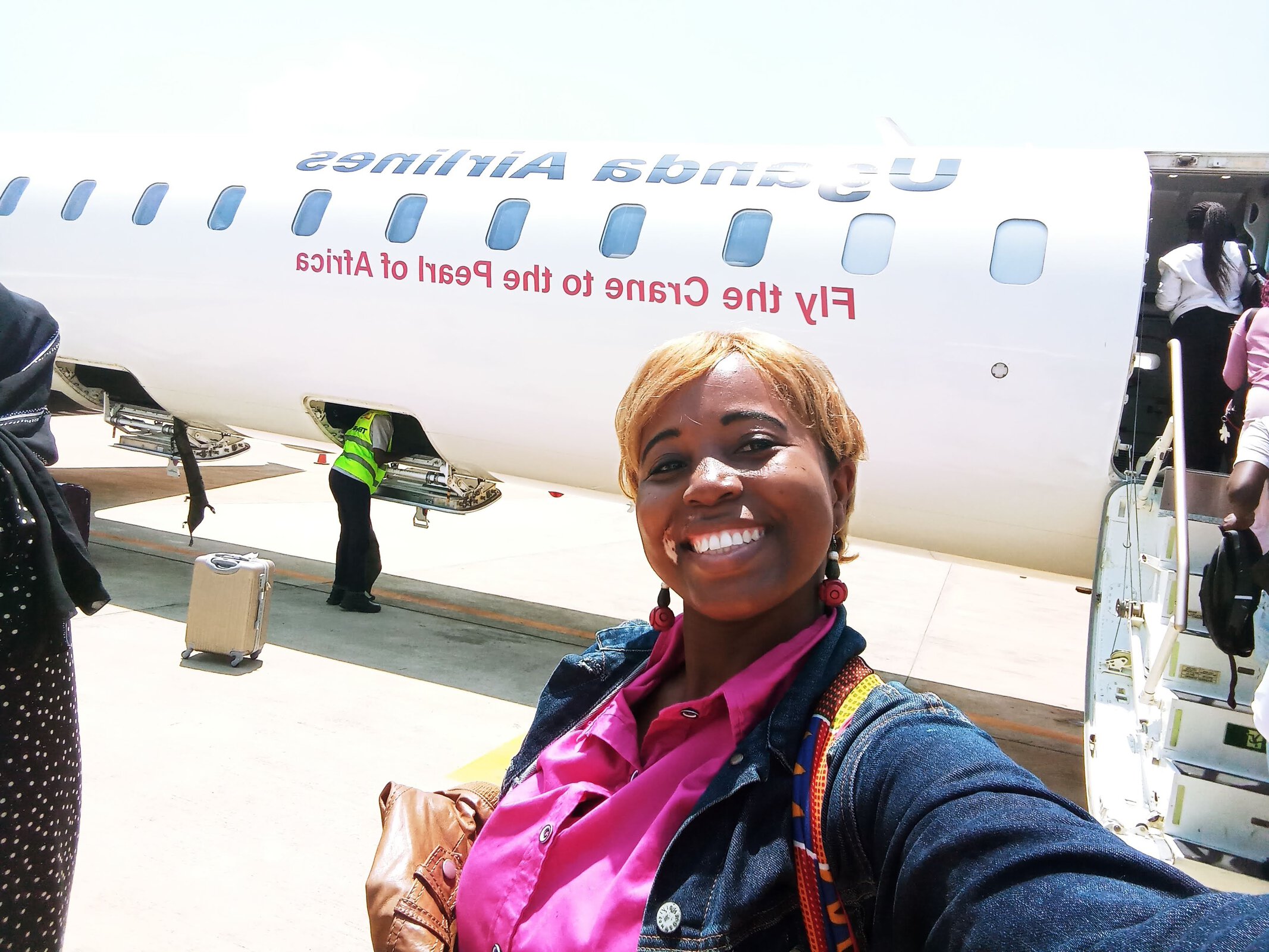
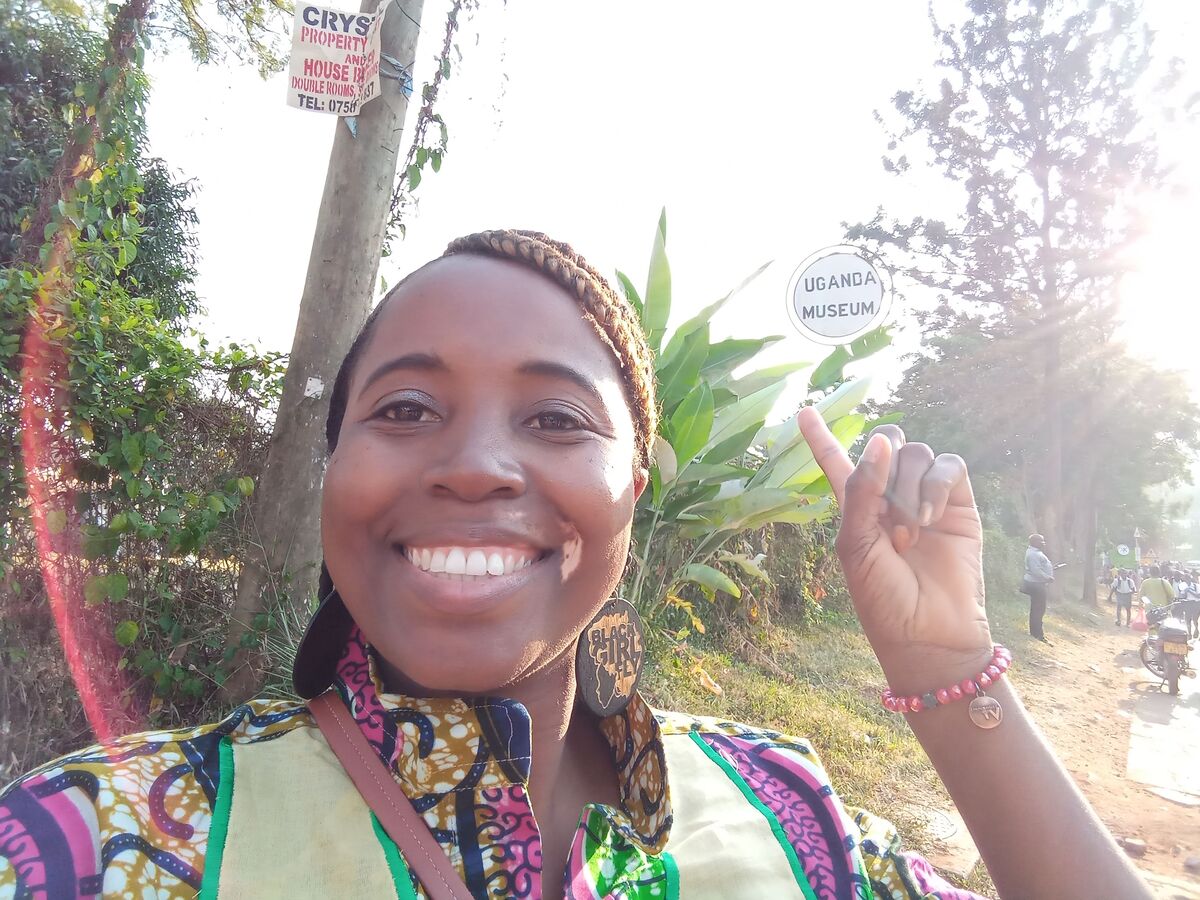

Museums are more than buildings filled with old objects. They are storytellers. They preserve a nation’s memories, celebrate its achievements, and pass history on to future generations. Having visited museums in about 30 museums in 20 countries, I have come to appreciate how each one reflects the identity of its people. Some focus on ancient civilizations, others on war, art, or science. The Uganda Museum surprised me because it combines all of these elements into one fascinating experience.
Sarah’s Note: While the current exhibits are a reflection of my 2024 visit, museums often rotate collections during renovations. Expect a fresh, updated experience when they reopen!
Located in the heart of Kampala, Uganda’s capital city, this museum offers visitors an opportunity to understand the country’s cultural diversity, political history, wildlife, music, archaeology, and technological development—all under one roof.
As I walked through its galleries, I realized this wasn’t simply a place to display old artifacts. It was a living record of Uganda’s journey from its earliest civilizations to the modern nation it is today.
Whether you’re visiting Uganda for the first time or looking for educational attractions in Kampala, the Uganda Museum deserves a place on your itinerary.
In this guide, I’ll share my personal experience exploring Uganda’s oldest museum as per my 2024 visit, what you can expect to see, and why I believe it’s one of the city’s most underrated attractions.
Table of Contents
- Introduction
- Quick Visitor Information
- First Impressions of the Uganda Museum
- Exploring the Museum Courtyard
- The Shops and Library
- A Warm Welcome—and an Unexpected Lesson
- Walking Through Uganda’s History
- Uganda’s Olympic History: A Gallery of National Pride
- The Presidential Car Collection
- What is special About Uganda’s Energy Development?
- Why was Uganda’s Forestry Heritage a display?
- Traditional Culture and Everyday Life
- Frequently Asked Questions: The Uganda Museum
Watch My Uganda Museum Tour
If you’d like to see the museum before your visit, watch my video below.
Quick Visitor Information
Location: Kampala, Uganda
Attraction Type: National history and cultural museum
Best For:
- Families
- History lovers
- Students
- First-time visitors to Uganda
- Cultural tourism
- Educational trips
Time Needed: 2–3 hours
Entrance Fee: I paid 15,000 Ugandan Shillings (Fees are subject to change following the facility’s renovation) as an international visitor. Prices may change over time, so it’s worth checking on their website before your visit.
Why Visit the Uganda Museum?
Many travelers visit Uganda to see mountain gorillas, go on safari, or explore national parks. While these experiences are unforgettable, the Uganda Museum offers something different—it helps you understand the people behind the country’s incredible landscapes.
Instead of simply showing historical objects, the museum tells the story of Uganda’s development through archaeology, culture, politics, sports, music, science, and daily life.
I particularly appreciated how the exhibits connected Uganda’s past with its future. Rather than focusing only on history, some sections also highlighted national achievements and ongoing development.
From my perspective, a country’s success is measured not only by how it remembers its past but also by how it continues to build a better future.
One feature that especially stood out was a large map displaying cultural and historical attractions across Uganda. For first-time visitors, this was incredibly useful because it introduced destinations I hadn’t previously considered visiting.
If you’re planning a road trip through Uganda, spending time studying this map can help you discover attractions beyond the country’s famous national parks.
First Impressions of the Uganda Museum
From the outside, the Uganda Museum appears relatively modest. It doesn’t have the grand architecture you might expect from a national museum.
However, appearances can be deceiving.
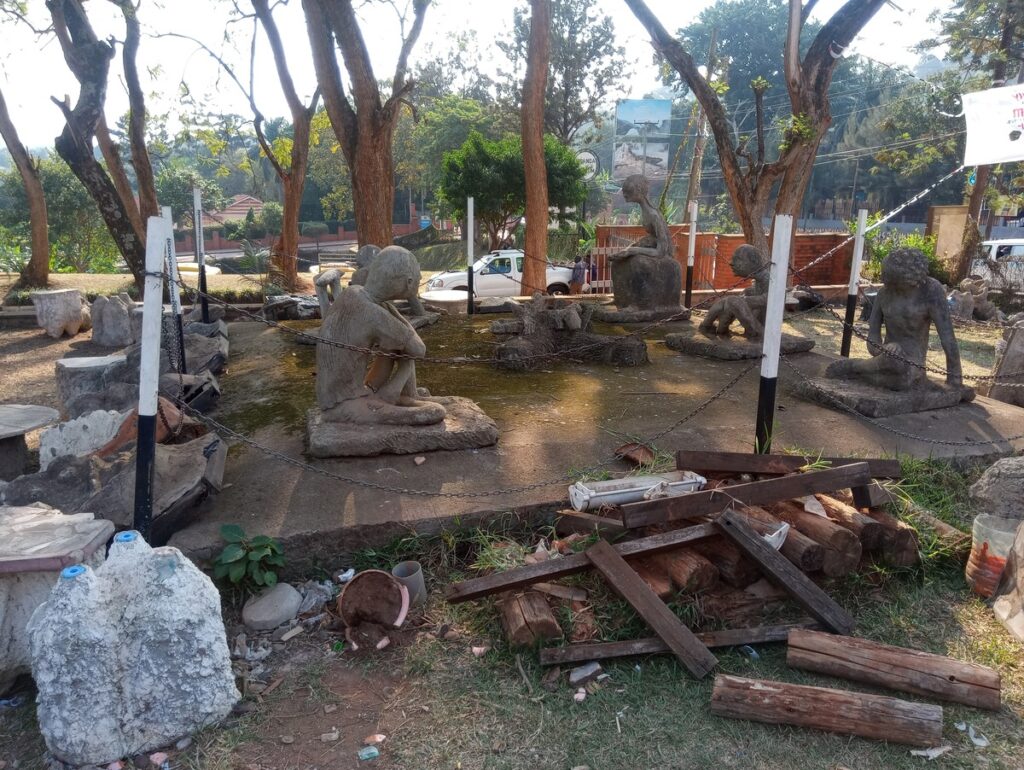
As soon as I entered the grounds, I discovered a peaceful courtyard filled with sculptures and historical displays that immediately hinted at the stories waiting inside.
The museum’s open space creates a calm atmosphere away from Kampala’s busy streets, making it an enjoyable place to begin your visit.
Exploring the Museum Courtyard
Before entering the main exhibition hall, I spent some time exploring the museum’s courtyard.
Several unique sculptures decorate the open space, each adding character to the grounds.
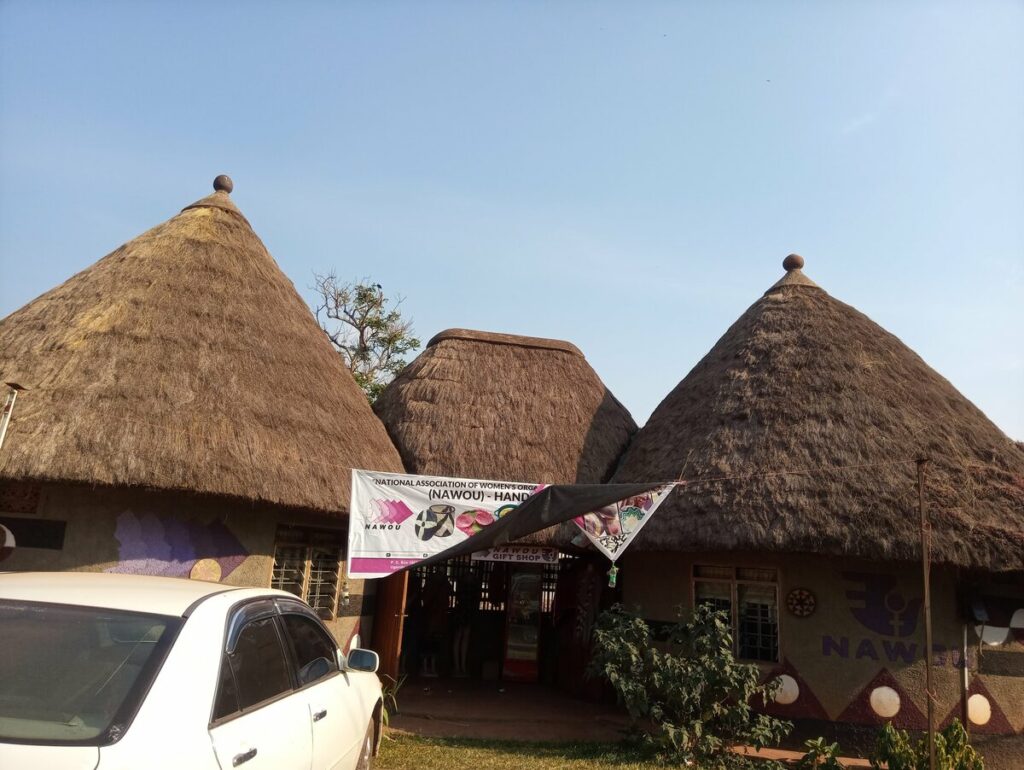
One of the highlights was seeing three traditional Ugandan huts constructed using local building techniques. These huts offer visitors a glimpse into traditional architecture and everyday life in rural Uganda.
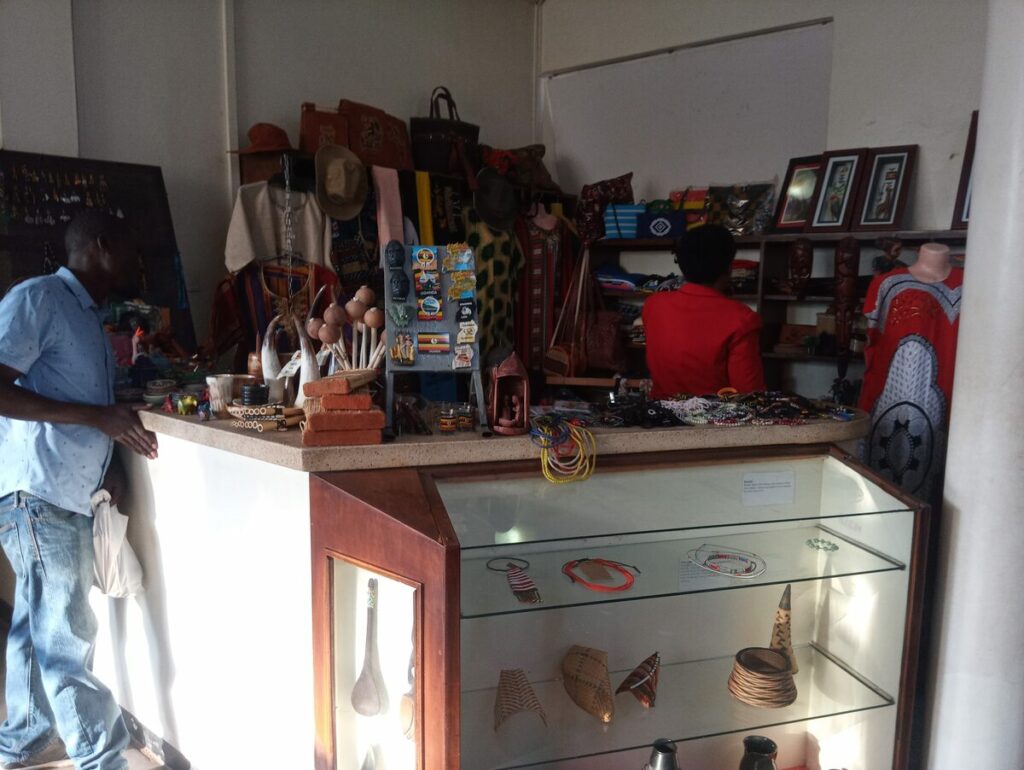
Inside, local artisans displayed handmade crafts ranging from decorative artwork to practical household items. If you’re looking for authentic Ugandan souvenirs, this is a much better place to support local artists than buying mass-produced gifts elsewhere.
Nearby stood an old firearm preserved from Uganda’s military history, providing another reminder of the country’s complex past.
The Shops and Library
Before reaching the reception area, I came across two small but interesting stops.
The first was a craft shop selling traditional Ugandan artwork, handmade baskets, carvings, jewelry, and souvenirs created by local artists.
Next door was a quiet library containing books about Uganda’s history, culture, wildlife, and politics, alongside works by African authors.
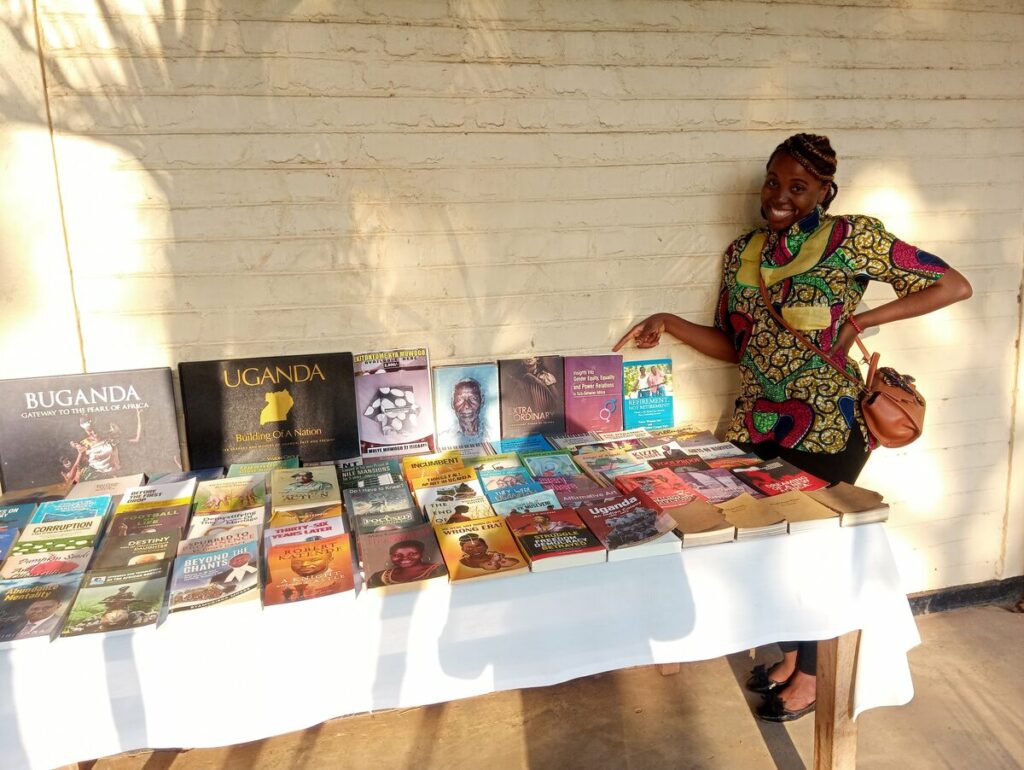
Outside on the veranda, a display table offered reasonably priced books covering Uganda, East Africa, and the African continent. For travelers interested in learning more about the country, these books make meaningful souvenirs that continue educating long after the trip has ended.
A Warm Welcome—and an Unexpected Lesson
When I reached the reception desk, I was greeted warmly by one of the museum staff members.
After paying the foreign visitor entrance fee of 15,000 Ugandan Shillings, I was assigned a guide who accompanied me throughout the museum.
This turned out to be one of the best parts of my visit.
Having a guide brought many of the exhibits to life, helping me understand the stories behind objects that I might otherwise have walked past without fully appreciating.
On the day I visited, the museum was buzzing with excitement.
Several groups of secondary school students were touring the museum as part of an educational field trip.
This immediately caught my attention because I had never experienced anything similar while growing up in Cameroon.
Watching these students actively learn about their country’s history, culture, and heritage inside a national museum left a lasting impression on me.
It showed the importance Uganda places on teaching younger generations about their identity and preserving their cultural heritage.
For me, this became one of the most memorable moments of the entire visit—not because of an exhibit, but because of the people experiencing it together.
Walking Through Uganda’s History
As I continued through the museum, I quickly realized how thoughtfully each gallery had been organized.
Rather than placing everything together, the museum divides its collections into themed sections that explore different aspects of Uganda’s story.
Each room focuses on a particular chapter of the nation’s history—from archaeology and ancient civilizations to politics, music, sports, traditional culture, technology, and natural history.
This organization makes it easy for visitors to follow Uganda’s remarkable journey from its earliest inhabitants to the modern nation it is today.
Instead of feeling overwhelmed, I found myself slowing down, taking time to appreciate each exhibit and the stories behind it.
Uganda’s Olympic History: A Gallery of National Pride
One of the exhibits that surprised me the most was the museum’s Olympic section.
I’ll admit that I wasn’t expecting to find an entire gallery dedicated to Uganda’s sporting history, but it quickly became one of my favourite parts of the museum.
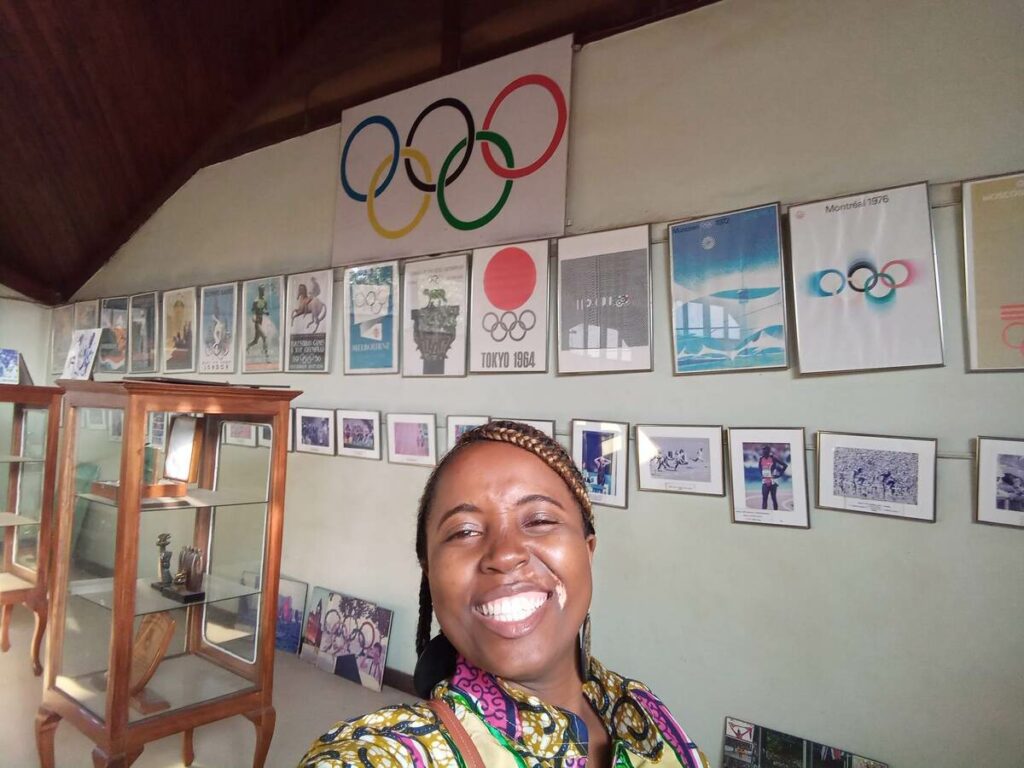
The walls were lined with photographs documenting Uganda’s participation in various Olympic Games over the decades. Each image was carefully labelled with dates and descriptions, creating a timeline that showcased the country’s journey on one of the world’s biggest sporting stages.
As I walked through the display, I could see how Ugandan athletes had represented their nation across different generations. Some photographs celebrated competitors who simply qualified for the Olympics, while others highlighted athletes who proudly brought home medals.
The collection wasn’t just about sports—it told stories of determination, national pride, and the dreams of athletes who carried Uganda’s flag before a global audience.
Awards That Continue to Inspire Future Generations
At the centre of this gallery stood a glass display cabinet filled with trophies, medals, and special awards.
Some of these belonged to well-known Ugandan athletes, while others had been donated by celebrated musicians and public figures whose achievements have inspired generations.
Seeing these awards displayed in a museum rather than tucked away in someone’s private collection was genuinely moving.
Instead of keeping their accomplishments to themselves, these individuals chose to share them with the public so that young Ugandans could learn from their journeys.
I found that incredibly inspiring.
It reminded me that success becomes even more meaningful when it encourages others to pursue their own dreams.
The Presidential Car Collection
Another exhibit I never expected to see inside a museum was a collection of presidential vehicles.
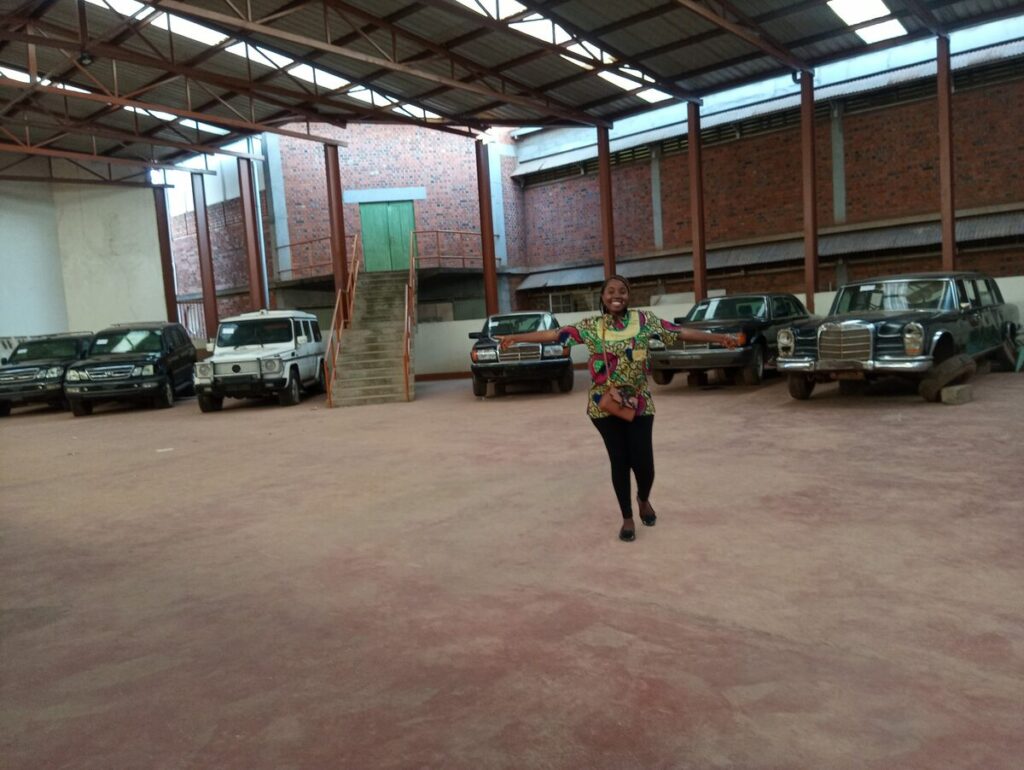
When my guide mentioned we were heading to the basement, I assumed we were moving to another historical gallery. Instead, we arrived at what looked like an underground parking area filled with official state vehicles.
It certainly wasn’t something I had seen in any museum before.
One of the first vehicles that caught my attention was associated with the late President Idi Amin, one of Uganda’s most controversial historical figures.
Nearby were several official vehicles used by President Yoweri Museveni during his years in office.
Whether you’re interested in politics or simply enjoy seeing vintage automobiles, this section offers an unusual glimpse into Uganda’s political history.
For me, it showed that history isn’t only preserved through documents and photographs. Even something as ordinary as a vehicle can tell a story about a particular period in a nation’s development.
If you’re someone who enjoys unique museum exhibits, don’t skip this section.
What is special About Uganda’s Energy Development?
Another area that stood out focused on Uganda’s electricity and energy sector.
Unlike many museum exhibits that only look backwards, this gallery explored how the country has continued to develop in recent decades.
The displays explained the importance of electricity generation, transmission, and distribution in supporting Uganda’s growing economy.
One unusual object immediately caught my eye.
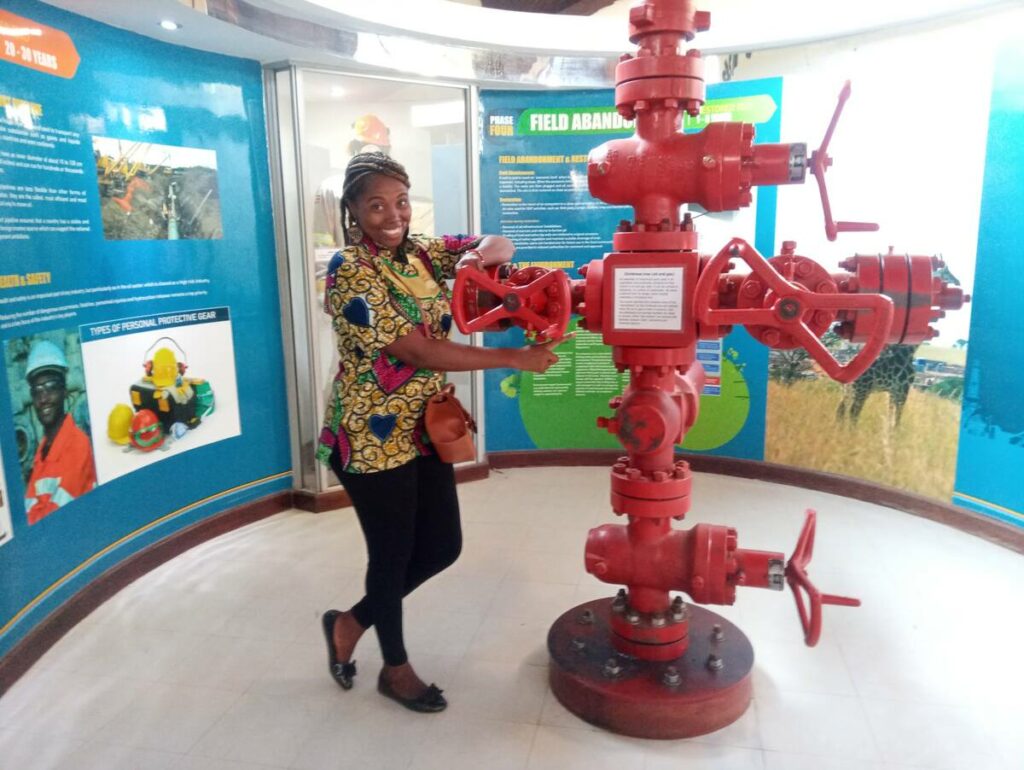
Standing in the centre of the room was a large red industrial structure nicknamed the “Christmas Tree.”
At first, I expected to see festive decorations because of the name, but my guide explained that it was actually a piece of equipment related to Uganda’s energy industry.
The nickname made me smile, but it also demonstrated how museums can make technical subjects more interesting and memorable.
Why was Uganda’s Forestry Heritage a display?
Next, I entered the forestry section, where nature and history came together.
Large wooden samples from different tree species found across Uganda were carefully displayed, allowing visitors to learn about the country’s forests and natural resources.
One exhibit that immediately drew my attention was an old wooden canoe.
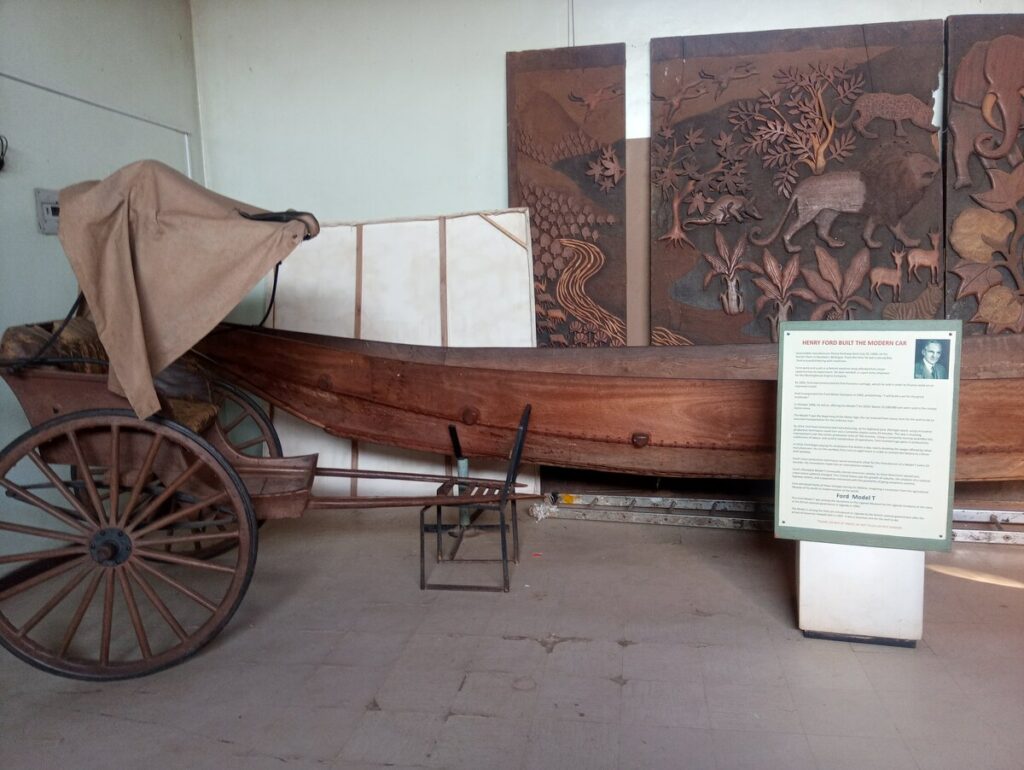
Simple in appearance, it represented a time when waterways served as important transportation routes long before modern roads connected different regions of the country.
Nearby was an antique navigation chart that had once been used for travel and exploration.
These objects helped paint a picture of how Ugandans moved, traded, and interacted with one another in earlier generations.
Standing close to these historical displays was a vintage European automobile, creating an interesting contrast between traditional methods of transport and more modern technology.
Seeing them side by side reminded me just how much transportation has evolved over time.
Traditional Culture and Everyday Life
If there was one section that truly captured Uganda’s identity, it was the cultural gallery.
This part of the museum celebrates the country’s many ethnic communities and traditions through clothing, jewellery, household items, crafts, and everyday objects that have been passed down through generations.
As I explored the exhibits, I realised that many of these traditions are still very much alive today.
Traditional Clothing
One display featured beautifully made traditional garments from different regions of Uganda.
Although some of these outfits date back many years, many are still worn during weddings, cultural ceremonies, festivals, and important family celebrations.
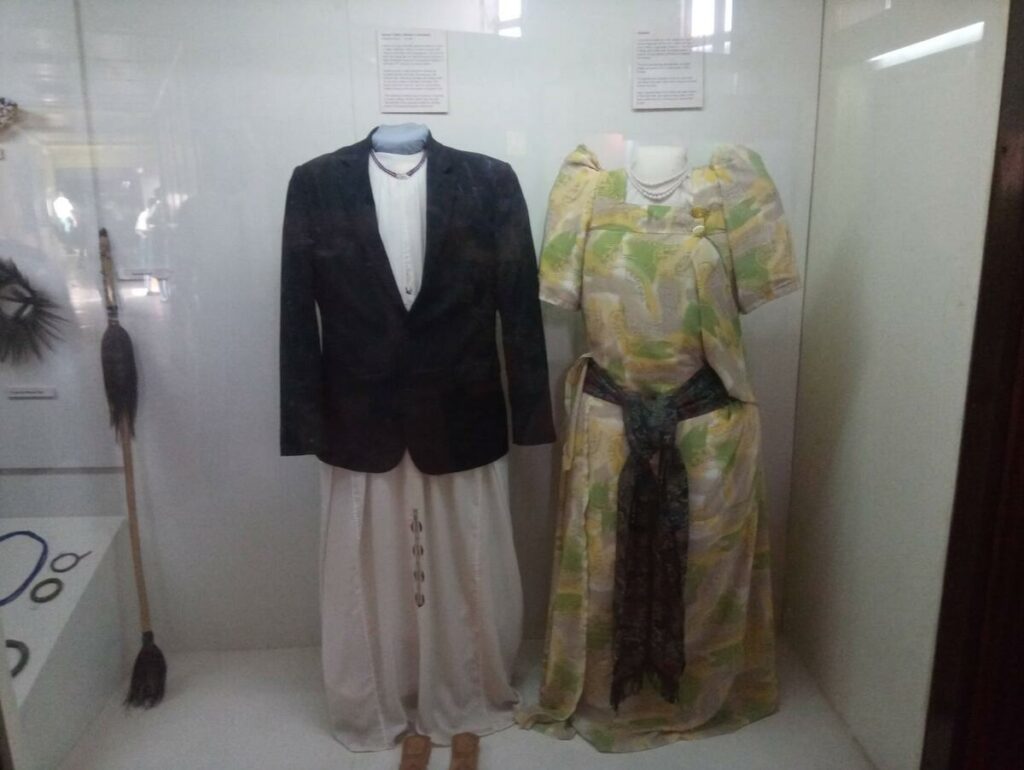
The colourful fabrics, elaborate headpieces, and handcrafted jewellery reflected the richness and diversity of Uganda’s many cultures.
Rather than feeling like costumes from the past, they represented traditions that continue to be celebrated today.
What was my favorite?
The cultural gallery was one of my favourite parts of the museum. Traditional clothing, handmade pottery, musical instruments, and jewellery from different regions of Uganda showed just how diverse the country’s heritage is. What I appreciated most was that many of these traditions are still alive today and continue to be celebrated at weddings, festivals, and cultural ceremonies.
You might also be interested in the Uganda airport to easily plan your trip. The video below gives you an idea.
Frequently Asked Questions: The Uganda Museum
The museum is open year-round and is mostly indoors, making it a great activity regardless of the weather. However, if you are visiting for the purpose of tourism, the dry seasons (June–August and December–February) are generally best for navigating the city of Kampala.
While the museum has made efforts to preserve its historical significance, the architecture can be older. It is advisable to contact the museum directly via their official channels if you require specific accessibility arrangements (such as wheelchair ramps or assistance) to ensure your visit is comfortable.
In many national museums, photography policies vary. Generally, non-commercial photography is permitted, but it is always respectful and safer to ask your guide or the reception desk upon arrival if you plan to use a professional camera or lighting equipment.
While there may be small vendors or nearby spots in the heart of Kampala, the museum itself is not primarily a dining destination. It is best to plan your meals before or after your 2–3 hour tour.
Final Thought: Why Museums Matter
Ultimately, the Uganda Museum is a testament to the idea that a nation’s identity is not a static thing—it is a tapestry woven from the memories of the past, the achievements of the present, and the aspirations of the future.
By walking through these halls, you aren’t just observing history; you are connecting with the soul of Uganda.
It is a reminder that when we take the time to learn the stories behind a country’s landscapes, our own journeys become that much richer.
I left with a deeper respect for the efforts made to preserve these narratives, and I hope you leave with a newfound curiosity to explore even more of the stories that shape our world.
Keep Exploring: More Museum Guides If you enjoyed this deep dive into the Uganda Museum, you might also like to explore these other cultural treasures on my blog:
- If you loved the history here, check out National Museum of Ethiopia: A Guide to Her Timeless Past, where we explore ancient architecture.”)
- For a different pace, discover how the Nairobi National Museum: Kenya’s history abode showcases local art and modern innovation.
Need help prepping for your next international adventure? Check out my guide on how to prepare for travel abroad here.
Want to take the journey deeper? Sign up for my weekly postcards and instantly download my free 3-day digest, ‘The Art of Wandering,’ to learn the exact spiritual rituals and mindful shifts I use to backpack the world solo with total confidence. [Click here to claim your free guide!]